Virtual Event: Holding Space with Heart: Trauma and Young Children
- Registration Closed
**Live Attendance Required to earn CEUs** (complete all requirements within 30 days of event).
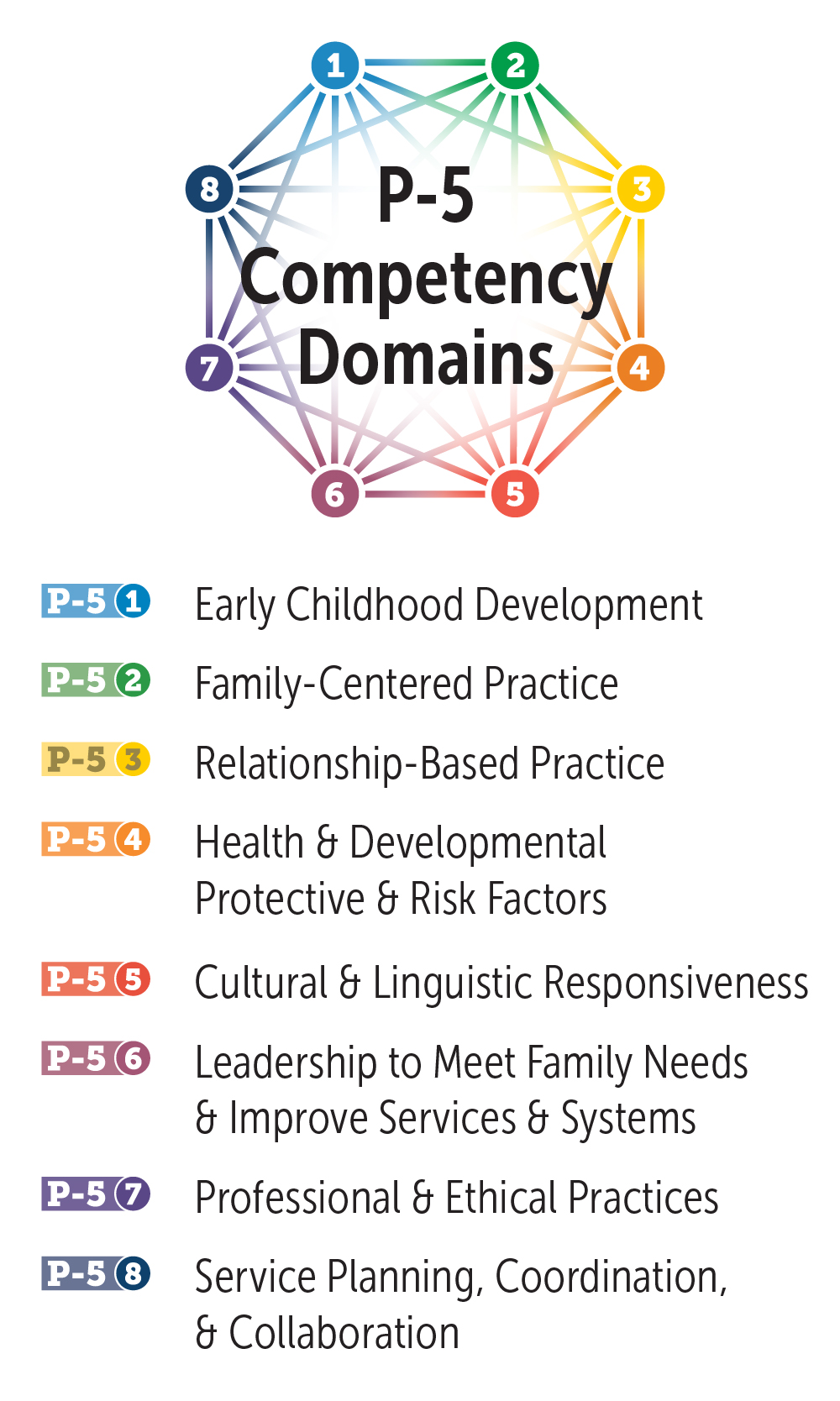
 | Professional and Ethical Practices: why and how to follow and apply high-quality practices consistent with ethical and legal standards, behaviors, requirements, and obligations; and improving practices based on evidence, emerging knowledge, and promising approaches |
Holding Space with Heart: Trauma and Young Children
February 25, 2026, 2:00 PM - 3:30 PM ET
This virtual member dialogue is an invitation to come together as a community to pause, connect, and support one another during a moment when our care and attention matter more than ever.
We are living through a period of profound national upheaval, and its impact is being felt deeply by young children, families, and the early childhood professionals who support them. Ongoing trauma, secondary trauma, and the loss of critical funding are affecting our capacity to care and respond, making shared reflection and connection especially important now.
This conversation will bring together a panel of respected leaders in infant and early childhood mental health from within our shared learning community. This will be an informal, reflective dialogue centered on collective questions, insights, and mutual support around trauma-informed care and strength-based engagement with young children and families.
Time for participant questions and dialogue will be woven throughout, with ZERO pressure to have answers and with space to consider small, meaningful actions that matter now.
Learner objectives: As a result of participating in this event, learners will be able to…
- Identify at least two ways that current national conditions, including trauma, secondary trauma, and funding disruptions, are affecting young children, families, and the early childhood workforce.
- Distinguish key characteristics of trauma-informed and strength-based approaches that support connection and resilience for young children and caregivers during times of crisis.
- Select at least one small, actionable strategy discussed during the session that can be applied to support children, families, or professionals in the present moment.
Nucha Isarowong
Director, Advanced Clinical Training Program
Barnard Center for Infant and Early Childhood Mental Health
Nucha Isarowong, PhD, LCSW, is Director of the Advanced Clinical Training (ACT) Program at the Barnard Center for Infant and Early Childhood Mental Health at the University of Washington. In this current role, he works to diversify and expand the infant and early childhood mental health clinical workforce in the state of Washington by centering relationships and principles of diversity, equity, inclusion, and belonging in program administration, curriculum, and delivery. He engages in efforts towards systems change by influencing multi-level systems integration of diversity-informed practice principles in the IECMH field broadly, and with specific attention to father engagement and (dis)Ability. Nucha is a ZERO TO THREE Fellow (2012-2013) and serves as a national workshop facilitator and member of the Executive Council of the Diversity-Informed Tenets for Work with Infants, Children and Families (Tenets) Initiative.
Noelle Hause
Senior Manager, Infant and Early Childhood Mental Health
ZERO TO THREE
Noelle Hause is the Senior Manager, Infant and Early Childhood Mental Health, for ZERO TO THREE’s Professional Innovations Division.
In her role, she works with a team to support the delivery of ZERO TO THREE’s professional development products and services. Specifically, Noelle leads and coordinates the delivery of Diagnostic Classification of Mental Health and Developmental Disorders of Infancy and Early Childhood (DC:0–5™) and other Infant and Early Childhood Mental Health related national and international professional development offerings. Noelle, a licensed clinical provider, completed a postdoctoral Irving Harris Child Development and Infant Mental Health Fellowship in 2011. Her training includes multiple evidence-based interventions: Child Parent Psychotherapy (CPP), Trauma Focused Cognitive Behavioral Therapy (TF-CBT), Incredible Years Parent Group Facilitator (IY), Incredible Years Small Children’s Group Therapy, Parent Child Interactional Therapy (PCIT), Promoting Maternal Mental Health (NCAST) and Trauma Informed Care. Noelle holds an Infant Mental Health Mentor - Clinical endorsement (Endorsement® for Culturally Sensitive, Relationship-Focused Practice Promoting Infant Mental Health - IMH-E ®).
In addition to her clinical work, Noelle brings experience in reflective supervision and consultation, and infant mental health endorsement. Her experience in developing training for professionals and student learning through higher education (in-person and virtual), focuses on growing capacity for families, professionals, and systems to support infant and early mental health. She has provided consultation across the early childhood field including home visiting, nursing, perinatal mental health, judicial, child welfare and fostering, and more.
Noelle is passionate about identifying opportunities for improving the capacity of caregivers, early childhood professionals, organizations, communities, and systems to provide quality mental health supports and early childhood education for infants and young children. She is committed to translating research into practice and using practice to inform research.
Catarina Furmark
Clinical psychologist, PhD student
BUP Luleå, Karolinska Institute
Catarina Furmark, M. Psych., is a clinical psychologist at the child and adolescent psychiatric outpatient clinic (BUP) in Luleå, Region Norrbotten in the north of Sweden. Ms. Furmark is a supervisor and trainer throughout Sweden in DC:0–5, Alarm Distress Baby Scale, developmental psychology, and attachment. She is a doctoral student affiliated with the neuropediatric unit of Karolinska Institute. Her research interests are parental representations, parent–infant interaction, and attachment. Ms. Furmark is also committed to developing interdisciplinary infant mental health training with an overarching aim to advance infant mental health policy. She is a member of the ZERO TO THREE international Expert Faculty on DC:0–5 and part of the Nordic working group for DC:0–5 in Norway, Denmark, Finland, and Sweden.
**Live Attendance Required** (complete within 30 days of event). All registrants will have 30-day access to the session recording.
ZERO TO THREE is pleased to offer Continuing Education Units for a wide range of learning events, both in person and on line.
Contact hours and CEUs are automatically added to your registration for no additional charge. Registrants can earn up to 0.1 CEU or 1 Contact hour for attending this event. Continuing Education Units are awarded with live attendance, completed session evaluation, and a passing quiz score of 75% or greater.
Learner Objectives:
- Identify at least two ways that current national conditions, including trauma, secondary trauma, and funding disruptions, are affecting young children, families, and the early childhood workforce.
- Distinguish key characteristics of trauma-informed and strength-based approaches that support connection and resilience for young children and caregivers during times of crisis.
- Select at least one small, actionable strategy discussed during the session that can be applied to support children, families, or professionals in the present moment.
Contact hours offered may vary per discipline. For more information regarding ZERO TO THREE CEUs, please visit: https://www.zerotothree.org/resources/1657-earn-ceus-from-zero-to-three. Please note: A computer or electronic device with internet connection is required for successful completion. This session will be hosted for one hour and includes a brief introduction, 45 mins of content based teaching, and 10 to 15 minutes of Q and A. Questions can be posted throughout the session, and the presenter will address as many as possible.
Additional Details:
ZERO TO THREE is accredited as an Authorized Provider of Continuing Education and Training by the International Association for Continuing Education and Training (IACET). In obtaining this accreditation, we have demonstrated compliance with the ANSI/IACET Standard, which is recognized internationally as a standard of excellence in instructional practices. As the official standard for continuing education and training, IACET Continuing Education Units (CEUs) are recognized by a wide range of organizations, including professional associations, regulatory boards, corporations, and universities.
Though IACET CEUs are widely accepted, it is up to each organization to choose whether or not it will accept them. For this reason, we strongly advise that you confirm in advance if a particular body accepts IACET CEUs. To view a list of companies, regulatory boards, and organizations that have reported to accept the IACET CEU credit, please click here. This list is not exhaustive, nor does it guarantee that an IACET CEU will automatically be accepted.
*Presenters have affirmed that they do not have proprietary interest in products, instruments, devices, services or materials discussed in this course, and have confirmed that they have not been compensated in relation to this presentation.
Key:
 Complete
 Next
Next Failed
 Available
 Locked
Learning Center